Our Services
What can Ciniva do for your company?
Learn About Services
 We have reached a pivotal point in digital marketing history. There is no turning back now. The way we search, shop, and consume information is shifting. This is the first year in which AI shopping agents have truly gone mainstream, which is just one of a plethora of developments business owners need to understand as we close out the year. Here are the top story lines surrounding holiday shopping in 2025:
According to Deloitte’s annual retail survey, approximately 57% of consumers expect the economy to weaken over the next six months. Furthermore, 77% of surveyed shoppers expect higher prices on holiday goods—the most negative outlook since Deloitte starting tracking consumer sentiment in 1997.
The outlook is equally dire according to the Consumer Confidence Survey (The Conference Board). “Consumer confidence tumbled in November to its lowest level since April after moving sideways for several months,” said Dana M Peterson, Chief Economist, of The Conference Board. “All five components of the overall index flagged or remained weak.”
The index tracks the following: Consumer Confidence; Present Situation and Expectation Index; Family’s Current Financial Situation; Family’s Expected Financial Situation, Six Months Hence; and Perceived Likelihood of a US Recession Over the Next 12 Months. This financial uncertainty is affecting the way consumers approach brands this holiday season, as you will see in the following items.
The way consumers view the economy is affecting their shopping priorities. In recent times past, shoppers—especially the younger generation—wanted to feel an emotional connection to the brands they patronized. Furthermore, many young consumers valued experiences over tangible products. However, during this time of financial uncertainty, we are seeing these preferences shift toward more practical applications. According to a Razorfish study, loyalty is now about convenience, product performance, and meeting real world needs.
“In an AI-enabled and hyper-fragmented marketplace, the traditional levers of loyalty are eroding as alternatives multiply and the cost to switch brands declines,” said Ryan Warren, Chief CRM Officer at Razorfish. “Brands that recognize this shift and focus on the real, functional drivers of repeat behavior will be best positioned to foster relationships that are built to last.”
Businesses and marketers still have options to cultivate brand loyalty. Discounts and loyalty points spark participation, while perks such as exclusivity, early access, and VIP treatment drive loyalty. Exclusivity ranked high, with 30% of respondents desiring limited edition drops, while 28% are interested in invitations to exclusive events or content.
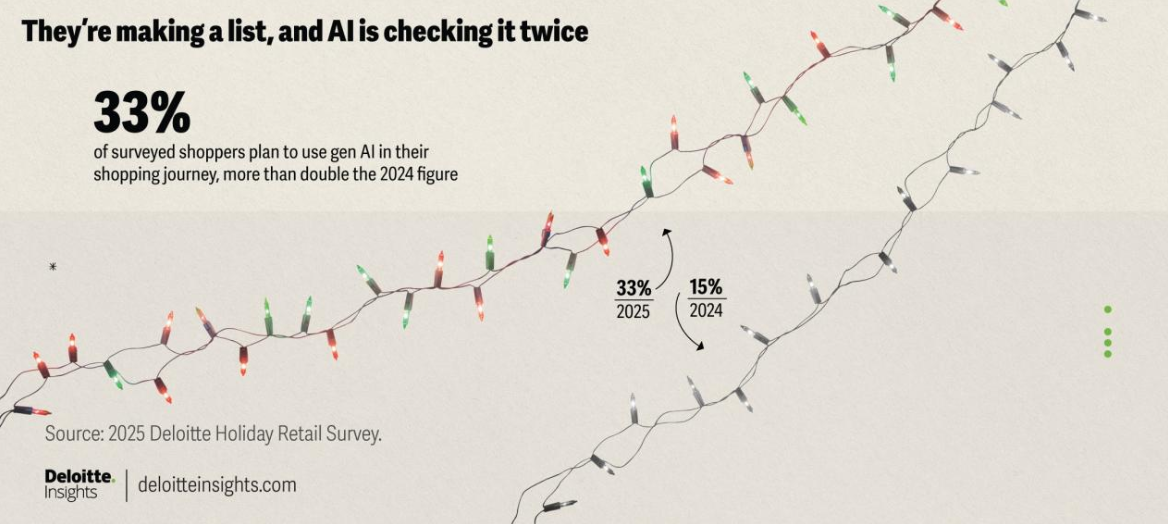
Thirty-three percent of survey respondents plan to use generative AI to holiday shop—more than double the 2024 figure. This figure is even higher among the younger generations. Consumers are using gen AI for finding deals, creating shopping lists, summarizing reviews, comparing products, and simplifying decisions.
Shoppers expect personalization and efficiency from Gen AI. Tailored recommendations, budgets, and suggested gift recipients are the new norm for digital retail experiences. Some shoppers even use gen AI to create personalized gifts, such as custom artwork or clothing. Companies are meeting the AI demand by embedding AI-powered gift finders, style assistants, or deal copilots directly into their sites or apps. Many retailers are also using AI to predict shopping trends in order to optimize pricing and inventory.
Generation Z is changing the way holiday shopping happens. They are the most likely generation to seek deals (95%), influencers and social media opinions (74%), and AI assistance (43%) with shopping (2025 Deloitte Holiday Retail Survey). Gen Z uses AI tools for inspiration, product discovery, and finding the best deals.
Interestingly, Gen Z added a throwback to the mix: in-store shopping. 72% of Generation Z planned to shop in-store for Black Friday, due to the excitement of the day. Gen Z is responsible for approximately 20% of holiday spending, which is five times higher than its 2020 share.
Connecting with this generation is about meeting shoppers where they are—digitally, socially, and emotionally. The companies that excel stand out by providing value, seamless technology interfaces, and value-added experiences. As technology evolves, it will be pivotal to watch how this generation of early adopters reacts.
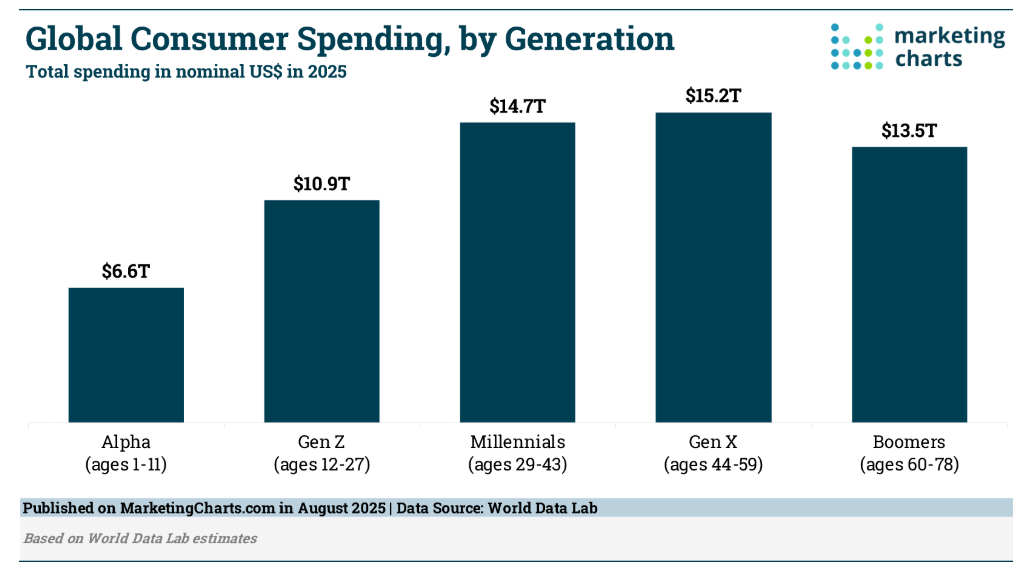
It’s been trendy for years to talk about Baby Boomers, Millennials, and Generation Z—all while Gen X has largely been ignored. That changes now. Despite being the smallest cohort out of the aforementioned groups, Gen X tops the charts for spending in 2025.
According to a report produced by NIQ and World Data Lab (Gen X – Marketing Charts), Gen Xers are forecasted to spend $15.2 billion this year. This outpaces both Millennials ($14.7 billion) and Baby Boomers ($13.5 billion).
Gen Xers’ spending power is hitting its peak earnings years, while their expenditures are rising due to caring for both children and parents.
More than ever, this holiday season emphasizes how much technology is rewriting the consumer experience. At Ciniva, we not only keep up with this rapidly changing environment, but we are at the forefront of creating both custom and out-of-the-box AI tools for businesses. Reach out to schedule a free demo and to discuss how we can help your business in 2026 and beyond.